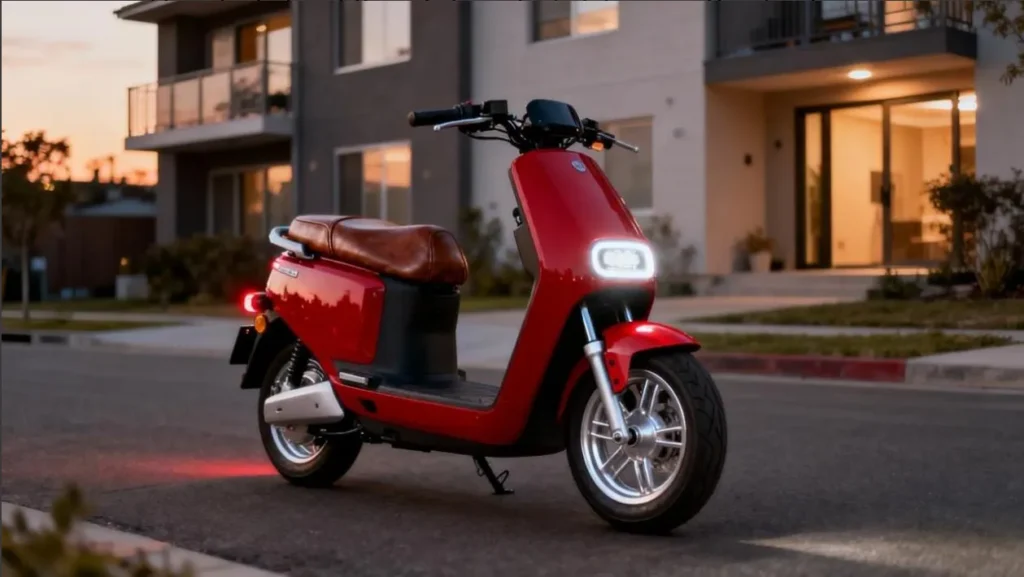

This electric two- and three-wheeler buying guide for importers explains how to compare battery systems, motor configurations, charging requirements, payload, service plans, packaging, and documentation before placing an order. A vehicle may look suitable in a catalogue, but the buyer still needs to confirm the battery system, motor configuration, charging requirements, payload, service plan, packaging, and documentation.
This checklist is designed for importers and distributors comparing electric scooters, passenger three-wheelers, and cargo three-wheelers for a local market.
1. Start with the operating application
Define how the vehicle will be used before comparing specifications.
For an electric scooter, consider:
- Personal commuting or delivery use
- Daily distance and charging access
- Rider comfort and storage needs
- Road surface and traffic conditions
For a three-wheeler, consider:
- Passenger or cargo application
- Required payload or passenger capacity
- Daily route and operating hours
- Turning space and road conditions
- Local maintenance capability
The correct specification depends on the application. A larger battery is not automatically the best choice if it adds weight, cost, or charging requirements that do not fit the user.
2. Confirm the battery information
Ask the supplier for a complete battery specification rather than relying on phrases such as “big battery” or “long range.” Confirm:
- Battery chemistry
- Nominal voltage
- Capacity in ampere-hours or kilowatt-hours
- Battery weight and location
- Removable or fixed design
- Charger specification
- Charging time under the stated conditions
- Battery warranty and replacement process
Current Kaisai product records show references to removable batteries and larger-battery configurations, but the exact voltage, capacity, chemistry, charger specification, and warranty terms still require confirmation for each model.
3. Review motor and controller details
Motor power should be matched to the vehicle’s weight, load, road conditions, and intended speed. A purchasing team should request:
- Rated motor power
- Peak motor power, if provided
- Motor type and supplier information
- Controller specification
- Torque or gradeability data, if tested
- Single- or dual-motor configuration
- Service and replacement procedure
Kaisai product records contain references to 1 kW, 1.5 kW, 2 kW, 3 kW, and dual-motor configurations, but the correct value must be confirmed from the approved model specification before publication or purchase.
4. Distinguish range claims carefully
Range can vary according to rider weight, payload, road conditions, speed, temperature, battery age, and test method. Ask the supplier to distinguish between:
- Certified or standardized range
- Manufacturer test range
- Estimated real-world range
- Range under passenger or cargo load
Do not use a single range number in a quotation or advertisement unless the test method and model configuration are clear.
5. Check the complete vehicle specification
For a fair comparison, request a model sheet that includes:
- Overall dimensions
- Vehicle weight
- Payload or passenger capacity
- Tire size
- Braking system
- Suspension system
- Lighting and instruments
- Ground clearance
- Charging interface
- Included accessories
For cargo vehicles, confirm the usable cargo area and payload rather than relying only on the body style. For passenger vehicles, confirm the seating layout and local operating requirements.
6. Review quality inspection and documentation
Quality checks should be agreed before production. Ask which inspections are performed and which documents are supplied with the shipment.
Possible checks include:
- Appearance and assembly inspection
- Battery and charger check
- Motor and controller function check
- Brake and lighting check
- Quantity and model verification
- Packaging inspection
- Pre-shipment acceptance inspection
The current Kaisai production records describe a quotation, sampling, configuration confirmation, payment, production, inspection, acceptance, and delivery sequence. Detailed welding, painting, battery assembly, vehicle testing, and factory inspection evidence still needs to be added before making detailed public quality claims.
7. Evaluate packaging and shipment preparation
International transportation adds handling, vibration, and storage risks. Confirm how the vehicle is prepared before shipment and what the dealer will need after arrival.
Kaisai’s current OEM information states that vehicles are disassembled into separate parts for shipment and protected with wooden frames. Confirm:
- Which parts are disassembled
- How each part is labeled
- What tools are included
- Whether assembly instructions are supplied
- How many vehicles fit in the planned shipment
- How spare parts are packed
- Who performs arrival inspection
8. Compare commercial terms and lead times
A supplier comparison should include more than the unit price. Review MOQ, sample cost, lead time, payment terms, packaging, spare parts, warranty, and delivery responsibilities.
The current Kaisai OEM terms are:
- MOQ: 10 units
- Sampling lead time: 15 days
- Mass-production lead time: 15 working days after receipt of the deposit
- Appearance and configuration customization: supported
The final terms should be confirmed by model, configuration, quantity, and production schedule in the quotation or contract.
9. Create a pre-order checklist
Before placing an order, confirm that you have:
- Approved model and configuration
- Final technical specification
- Battery and charger details
- Agreed inspection standard
- Confirmed packaging and shipment method
- Spare-parts list
- Warranty terms
- Payment and delivery terms
- Local compliance requirements
- Dealer or service plan
If any of these items is missing, list it as an open question instead of assuming that the supplier’s standard configuration will meet the market need.
Conclusion
The best electric vehicle purchase decision comes from matching the vehicle to the use case and verifying the details that affect daily operation. Review the battery, motor, range method, payload, quality process, packaging, lead time, and after-sales plan before placing an order.
Kaisai supports customized electric two- and three-wheeler OEM projects with a current stated MOQ of 10 units. Contact Kaisai to request model information and discuss a configuration for your market.
Request Product Information