
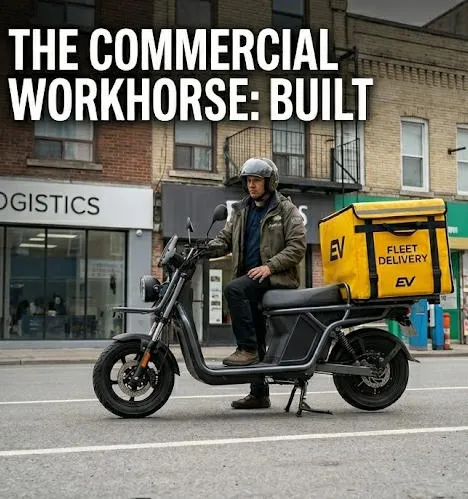
Building an electric vehicle dealership program is not only about finding a vehicle with a competitive price. A sustainable dealership program needs products that fit the local market, a supplier that can support repeat orders, and a clear plan for demonstrations, spare parts, warranty handling, and customer service.
For dealers working with electric scooters and three-wheelers, the right supplier can help turn a product catalogue into a practical sales program. This guide explains the main points to review before launching or expanding an electric vehicle dealership.
1. Define the customer and use case first
Begin with the customer rather than the vehicle. Electric scooters and three-wheelers may be used for personal transportation, passenger service, cargo delivery, local business operations, or fleet applications.
Ask:
- Who will use the vehicle every day?
- What distances and road conditions are expected?
- Is the main need personal mobility, passenger transport, or cargo movement?
- Will customers charge at home, at a depot, or at a workplace?
- Does the dealer need a simple ready-made model or a customized configuration?
These answers help determine which models to display, which spare parts to stock, and what training sales staff will need.
2. Build a focused model range
A new dealership does not always need a large catalogue. A focused range can make sales training, spare-parts planning, and customer support easier.
Consider organizing the range by application:
- Electric scooters for personal and daily urban mobility
- Passenger three-wheelers for local transport
- Cargo three-wheelers for delivery and small-business use
- Customized models for a specific fleet or distributor requirement
Before publishing technical claims, confirm each model’s battery capacity, motor power, charging time, tested range, payload, dimensions, and warranty. These fields are not yet fully confirmed in the current Kaisai folder and should be added to the product sheets before a final dealer catalogue is released.
3. Evaluate customization and brand support
Some dealers want to sell an existing product. Others want a vehicle that carries their own local brand or a dedicated Kaisai product identity.
Kaisai supports appearance and configuration customization for OEM projects. This may be useful for distributors who need specific colors, labels, accessories, or configurations for their market. Customization should be agreed before sampling so that the quotation, sample, production plan, packaging, and service documents remain aligned.
Discuss:
- Appearance and color requirements
- Brand labels and packaging
- Configuration and accessory requirements
- Local market positioning
- Sample approval process
- Replacement parts for the selected configuration
4. Check minimum order and ordering stages
The order process should be simple enough for a dealer to understand and repeat. Kaisai’s current OEM information states a minimum order quantity of 10 units.
The cooperation process includes:
- Requirements and quotation
- Sampling and confirmation
- Contract signing and deposit payment
- Mass production and quality inspection
- Acceptance and delivery
The current stated sample lead time is 15 days. Mass production is stated as 15 working days after receipt of the deposit. These are indicative terms and should be confirmed for the selected model, configuration, quantity, and production schedule before an order is signed.
5. Prepare demonstrations and sales materials
Electric vehicles are easier to sell when customers can understand the use case. A dealer program should prepare more than a price list.
Useful materials include:
- Product specification sheets
- Application photos and videos
- Charging and daily-use guidance
- Comparison checklists
- Warranty explanation
- Spare-parts list
- Dealer training notes
- Frequently asked questions
If the market includes both personal and commercial buyers, prepare separate sales messages. A commuter may focus on comfort and charging convenience, while a fleet operator may focus on uptime, maintenance, and operating conditions.
6. Plan spare parts and service responsibilities
Before accepting customer orders, define who will handle service. The dealer and manufacturer should agree on the parts and technical information needed for normal operation.
Review:
- Common replacement parts
- Charger and battery support
- Controller and motor troubleshooting
- Warranty claim procedure
- Technical response channel
- Dealer or technician training
- Expected response time
The current Kaisai folder does not yet contain a finalized supplier-specific warranty and spare-parts policy. This should be completed before publishing a detailed service promise.
7. Use a controlled first order
A first order can be used to test customer response, dealer training, packaging, assembly, and service requirements. Keep the initial range focused and collect feedback from actual users.
Track:
- Which applications generate the strongest interest
- Which configurations customers request
- Which parts require the most support
- Whether packaging and assembly instructions are clear
- Which product questions sales staff cannot answer
The results can guide the next order and help the dealer build a stronger local product strategy.
Conclusion
A successful electric vehicle dealership program combines the right product range with clear supplier support. Define the customer use case, confirm the technical information, agree on customization, prepare service resources, and start with a controlled first order.
Kaisai supports appearance and configuration customization and currently states an MOQ of 10 units for OEM projects. Contact Kaisai to discuss a suitable electric two- or three-wheeler product and distributor cooperation plan.
Become a Kaisai Distributor