
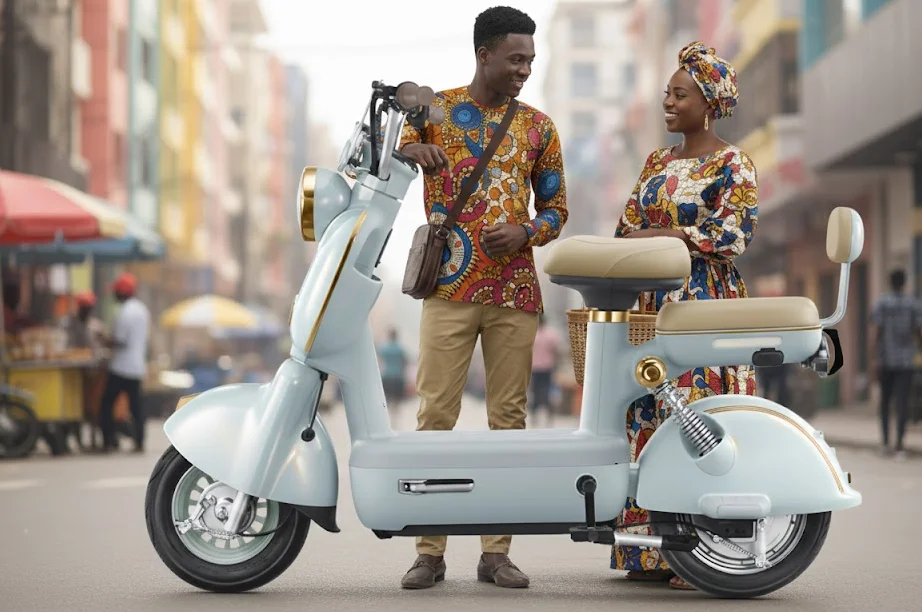
Launching an electric scooter and three-wheeler OEM brand requires more than selecting a vehicle from a catalogue. A successful project needs the right product configuration, a reliable manufacturing partner, clear quality requirements, practical packaging, and a repeatable delivery process.
For importers and distributors, OEM and ODM manufacturing can provide a way to build a product range under their own brand. Instead of investing in a complete factory from the beginning, the brand owner can work with an experienced manufacturer to develop, customize, test, and deliver electric vehicles for a specific market.
This guide explains the main steps involved in starting a private-label electric scooter or three-wheeler brand.
1. Define your market and business model
Start by identifying who will use the vehicle and how it will generate value. A personal electric scooter, a passenger three-wheeler, and a cargo tricycle may serve completely different customers.
Consider the following questions:
- Is the vehicle intended for personal transportation, passenger service, delivery, or commercial fleets?
- What road, climate, distance, and load conditions will it face?
- Who will buy the vehicle: consumers, dealers, fleet operators, or local businesses?
- Will you sell under your own brand, distribute an existing brand, or use both models?
- What price range and after-sales support can your market sustain?
The answers will influence the vehicle category, battery and motor configuration, body design, spare-parts plan, and sales channel.
2. Choose between OEM, ODM, and ready-made vehicles
There are three common approaches to building an electric vehicle product line.
OEM manufacturing
Under an OEM model, the manufacturer produces vehicles according to the buyer’s requirements. The buyer may provide the brand identity, preferred specifications, colors, labels, packaging, or other requirements.
ODM manufacturing
Under an ODM model, the manufacturer provides an existing platform or product design that can be adapted for the buyer’s market. This approach can reduce development time while still allowing selected customization.
Ready-made wholesale
Ready-made vehicles are purchased with limited changes. This may be suitable for a quick market test, but it usually offers less differentiation for a new brand.
For companies building a long-term brand, a customized OEM or ODM project can offer a better balance between product identity, development speed, and investment.
3. Select the right vehicle platform
Your product range should match the use case rather than simply follow the most popular-looking design.
For electric scooters, review:
- Riding position and comfort
- Battery location and removal requirements
- Motor power and expected road conditions
- Charging method and daily travel pattern
- Storage, lighting, braking, and safety features
For electric three-wheelers, review:
- Passenger or cargo application
- Payload and passenger capacity
- Chassis and body configuration
- Turning space and road width
- Suspension and braking requirements
- Battery access and serviceability
A manufacturer should be able to explain which configurations are available and which changes may affect cost, lead time, testing, or spare parts.
4. Customize the appearance and configuration
Kaisai supports customization of vehicle appearance and configuration for OEM projects. Depending on the model and project scope, customization may include colors, body details, labels, selected components, packaging, and other agreed requirements.
Before requesting a quotation, prepare a simple product requirement document covering:
- Brand name and logo requirements
- Vehicle category and intended application
- Preferred colors and appearance
- Battery and motor preferences
- Required accessories
- Target market and local requirements
- Estimated first order quantity
- Packaging and shipping expectations
Clear requirements help the manufacturer prepare a more accurate quotation and reduce changes during sampling.
5. Request a sample before mass production
Sampling is the stage where the buyer checks whether the proposed vehicle matches the intended brand and application. A sample should be reviewed from both a commercial and technical perspective.
Check:
- Appearance and color consistency
- Brand labels and markings
- Riding or operating position
- Vehicle dimensions
- Battery and charger arrangement
- Fit and finish of major components
- Packaging and protection requirements
- Basic performance under the intended use case
Kaisai’s stated sampling lead time is 15 days. The final timing should be confirmed according to the selected model, configuration, and sample requirements.
Do not approve mass production until the sample, specification, packaging, and quality requirements have been confirmed in writing.
6. Establish quality and delivery requirements
Quality should be discussed before the order is placed, not only after production is finished. The buyer and manufacturer should agree on what will be checked and how acceptance will be handled.
A practical quality plan may include:
- Appearance inspection
- Functional inspection
- Battery and charging checks
- Motor and controller checks
- Braking and lighting checks
- Fastener and assembly inspection
- Packaging inspection
- Quantity and model verification before shipment
The exact inspection items should be matched to the vehicle model and the buyer’s market requirements. Any required certification or local compliance document should also be confirmed before production.
7. Plan packaging and international transportation
Electric two- and three-wheelers often need careful packaging because they may be transported over long distances and handled several times before reaching the dealer or end customer.
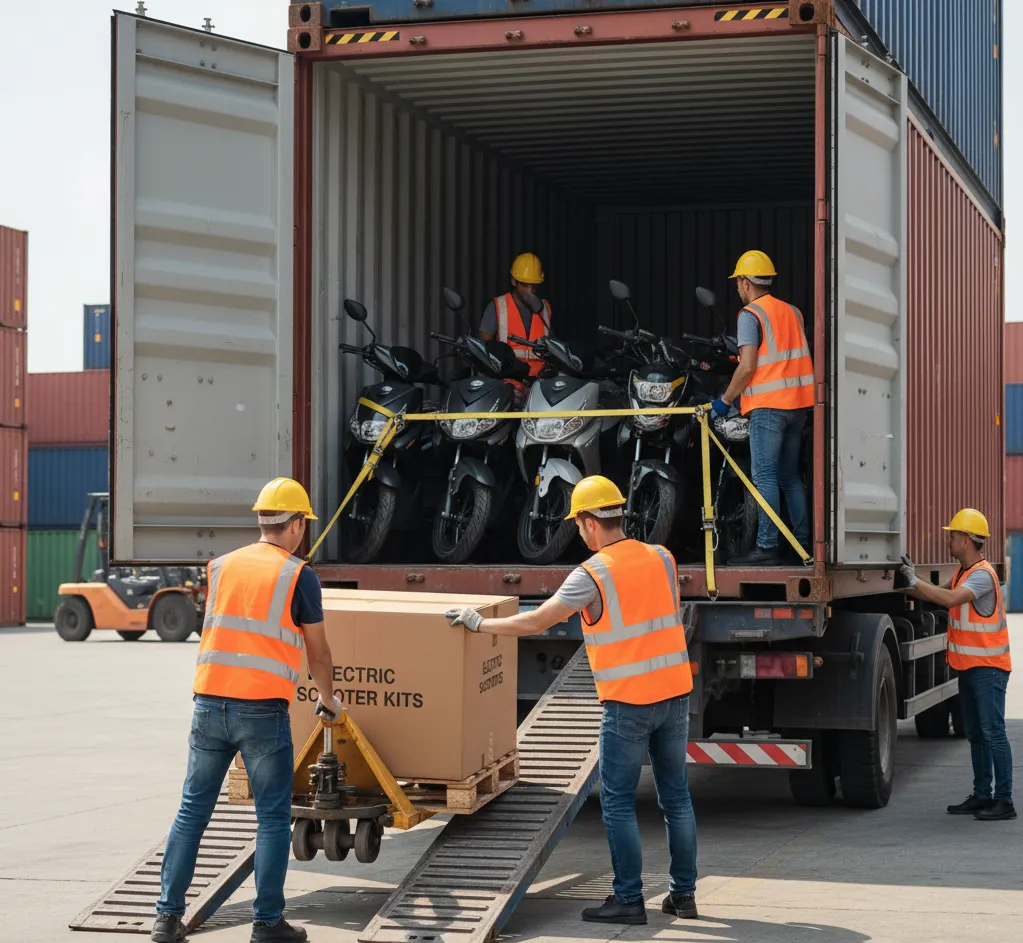
For Kaisai OEM shipments, vehicles are disassembled into separate parts for transportation and protected with wooden frames. This approach should be reviewed with the buyer’s logistics partner to confirm container loading, assembly requirements, unloading space, and local service capability.
Before shipment, confirm:
- Packing list and quantity
- Vehicle parts included in each package
- Wooden-frame protection requirements
- Spare parts and tools
- Assembly instructions
- Shipping marks and documentation
- Responsibility for final inspection and acceptance
8. Understand the OEM cooperation process
Kaisai’s OEM cooperation process follows five stages:
- Requirements and quotation — Confirm the product, configuration, quantity, and commercial requirements.
- Sampling and confirmation — Produce and review a sample before moving to mass production.
- Contract signing and deposit payment — Confirm the order terms and receive the agreed deposit.
- Mass production and quality inspection — Manufacture the order and complete the agreed quality checks.
- Acceptance and delivery — Complete final acceptance and arrange delivery.
The current commercial information for Kaisai OEM projects is:
- Minimum order quantity: 10 units
- Sample lead time: 15 days
- Mass-production lead time: 15 working days after receipt of the deposit
- Customization: Appearance and configuration customization supported
These are indicative commercial terms. The final lead time may vary according to the model, configuration, order quantity, and production schedule, so it should be confirmed in the quotation or sales contract.
9. Build the after-sales plan before launch
A new electric vehicle brand needs support after the first shipment. Dealers and fleet buyers will want to understand how they can obtain technical help, spare parts, warranty service, and replacement components.
Prepare an after-sales plan that covers:
- Warranty terms
- Spare-parts list
- Common maintenance items
- Troubleshooting instructions
- Technical training for dealers
- Response channels and service responsibilities
- Battery and charger support
- Procedure for handling quality claims
Strong after-sales preparation can make a new brand easier for distributors to introduce and easier for customers to trust.
10. Start with a controlled first order
The first order should be treated as a market validation project. Use it to test product acceptance, dealer feedback, operating conditions, packaging, assembly, and service requirements.
Rather than expanding the product range too quickly, begin with a clear set of models and collect feedback from actual users and channel partners. Then use that feedback to refine the next configuration or order.
For a new brand, a controlled first order can help reduce product risk while creating evidence for future distributor discussions.
Conclusion
Starting an electric scooter or three-wheeler brand is a step-by-step process. The most important decisions are choosing the right market, defining the product requirements, selecting a capable OEM or ODM partner, approving a sample, agreeing on quality standards, and preparing reliable after-sales support.
Kaisai supports appearance and configuration customization, with an MOQ of 10 units. Its current OEM process covers requirements and quotation, sampling, contract and deposit, production and quality inspection, and final acceptance and delivery.
If you are planning to launch an electric scooter or three-wheeler brand, prepare your product requirements and contact Kaisai to discuss an OEM quotation.
Request an OEM Quote