
The global last-mile delivery market is experiencing an unprecedented boom. From food delivery apps to e-commerce logistics, the demand for fast, cost-effective, and reliable urban transport has never been higher.
However, delivery fleet operators face a tightening squeeze: rising fuel costs, volatile maintenance fees for aging gas-powered fleets, and strict municipal carbon-emission penalties.
For smart logistics managers and B2B vehicle distributors, purchasing bulk electric scooters for delivery fleets is no longer just an eco-friendly statement—it is a critical strategy to protect profit margins and optimize operational efficiency.
Here is a comprehensive analysis of why electric scooters are rewriting the rules of last-mile logistics and how to choose the right fleet partner.
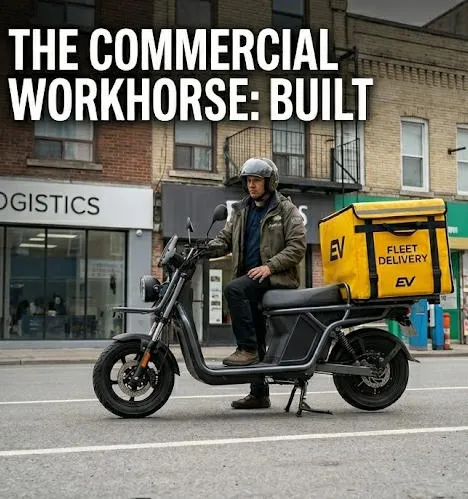
1. Radical TCO Reduction: The Math Behind the Switch
For any fleet manager, TCO (Total Cost of Ownership) is the metric that matters most. When evaluating gas-powered motorcycles against commercial-grade electric delivery scooters, the savings are clear and immediate.
- Fuel vs. Electricity: Electricity costs per mile are roughly 60% to 80% lower than commercial gasoline globally. Over a fleet of 50 or 100 vehicles operating 10 hours a day, these savings scale directly into thousands of dollars back into your bottom line every month.
- Minimal Maintenance Downtime: Traditional internal combustion engines (ICE) have hundreds of moving parts requiring frequent oil changes, spark plug replacements, and transmission tune-ups. Electric scooters feature a simplified drivetrain—primarily a brushless hub motor or a central mid-motor—meaning fewer parts that can break down and less time spent in the repair shop.
Fleet Insight: Every hour a delivery vehicle spends in a repair shop is an hour it isn’t generating revenue. Electric fleets offer up to 40% higher uptime compared to traditional ICE fleets.
2. Eliminating Range Anxiety: Removable Batteries & Swapping Ecosystems
The biggest historical objection to electric fleet deployment was Range Anxiety—the fear that a rider would run out of power mid-delivery and waste precious hours waiting for a recharge.
Modern commercial electric scooters have completely solved this through Advanced Dual-Battery Systems et Battery Swapping Technology (CKD/SKD compatible).
| Feature | Single/Fixed Battery | Dual Removable Battery Systems |
| Operational Window | 4-6 hours (Requires charging downtime) | 24/7 Continuous Operation |
| Average Range | 50-60 km | 120-160 km (With dual heavy-duty packs) |
| Turnaround Time | 3-5 hours via standard wall outlet | Less than 30 seconds via battery swap |
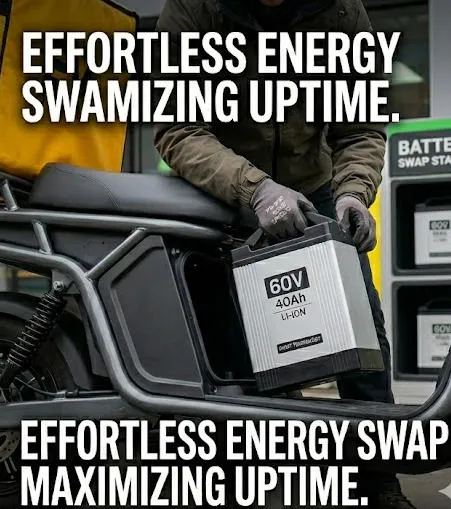
By equipping your bulk fleet with removable Lithium-ion (LiFePO4 or NiCoMn) batteries, couriers can simply drop a depleted battery into a centralized charging dock and slide in a fully charged one in under half a minute. This turns your fleet into a perpetual motion machine perfectly suited for high-density, multi-shift delivery environments.
3. Built for Heavy-Duty: Commercial Customization (OEM/ODM)
A standard consumer scooter will fail within months if subjected to the grueling demands of a professional courier. When sourcing electric scooters in bulk, B2B buyers must prioritize heavy-duty commercial engineering.
Key structural requirements for a reliable delivery fleet include:
- Reinforced Cargo Chassis: Heavy-duty rear racks capable of carrying massive, insulated delivery boxes (up to 50kg–100kg load capacities) without altering the bike’s center of gravity.
- Dual Heavy-Duty Kickstands: Standard side stands quickly wear out under heavy loads. Commercial fleets require center stands or reinforced dual-side supports to ensure stability during rapid stop-and-go delivery cycles.
- High-Torque Hub Motors: At least 2000W to 4000W of power to ensure the vehicle can confidently navigate steep city inclines, heavy loads, and rain-soaked streets without overheating.
4. Smart Fleet Telematics: IoT Integration & Asset Protection
Managing a bulk delivery fleet requires precise, real-time data. Modern commercial electric scooters come integrated with Smart IoT (Internet of Things) Modules that link directly to centralized fleet management software via 4G/5G networks.
This allows dispatchers and operators to track:
- GPS Real-Time Tracking & Geofencing: Monitor precise vehicle locations, optimize delivery routes, and prevent unauthorized usage outside designated zones.
- Remote Diagnostics & Anti-Theft: Instantly track battery health (BMS data), receive alerts on mechanical anomalies before they cause a breakdown, and remotely lock the motor or cut power in the event of theft.
- Rider Behavior Monitoring: Track aggressive acceleration or hard braking to improve driver safety and prolong vehicle lifespan.
Partnering for Success: Sourcing Your Fleet in Bulk
When buying bulk electric scooters for your delivery fleet, choosing a manufacturer that understands international compliance and shipping logistics is paramount.
Look for partners offering EEC/COC (Europe), DOT (USA), or ADR (Australia) certifications to ensure seamless customs clearance. Furthermore, ask your supplier about SKD (Semi-Knocked Down) or CKD (Completely Knocked Down) shipping options; shipping vehicles in parts significantly reduces ocean freight costs and import tariffs in regions like Southeast Asia and Latin America.
Ready to future-proof your logistics network? Contact our B2B fleet consultation team today to request custom OEM branding options, tiered bulk pricing, and specialized CKD/SKD shipping quotes designed to scale your delivery business.